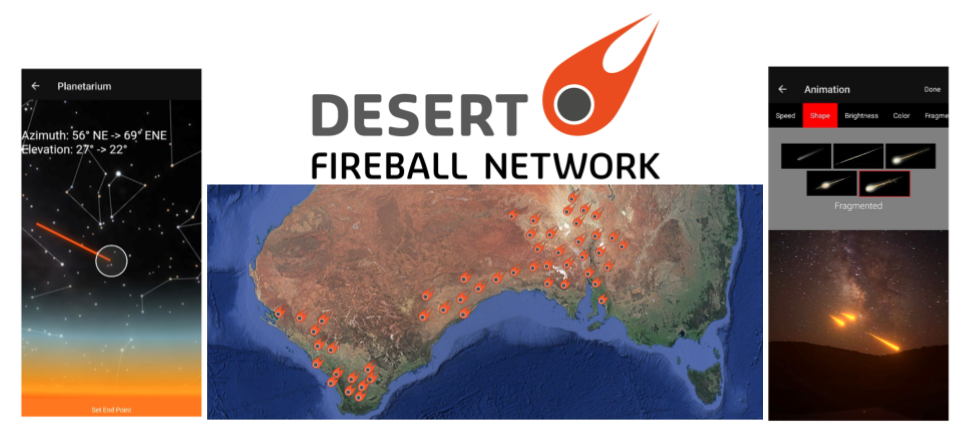
In a previous semester ADACS conducted a code audit for the Fireballs in the sky app (see here). This audit resulted in a detailed plan for all the work needed to reimplement the app, and to incorporate new features. In short, the goals for this semester were to use React Native to create a 3d planetarium viewer that would allow users to trace the trajectory of a meteor, indicate the brightness and colour, and make notes about fragmentation and sounds.
New features for this app include:
During 2024B the main focus of the project was to demonstrate the core features of the app: a planetarium viewer and fireball simulation tool that allows users to report the important features of a fireball including it's path across the sky, it's brightness and speed, it's colour, and whether there was any audible sounds present.
During the 2025A semester, the focus was creating an MVP app that included all the features listed above. Additionally the app was deployed to the Google Play store for testing by the science team, and the iOS version was deployed on test devices.
During the 2025B semester, the project focused on finding solutions to some outstanding issues. These included the ability to include ephemeris for non-stellar objects, for display in the planetarium view, an improved use of the on device magnetometer to identify true north (and support for devices with no magnetometer), and an improved fireball animation. The app is now being tested on both iOS and Android devices via the respective app stores.
Check out some of our other projects.
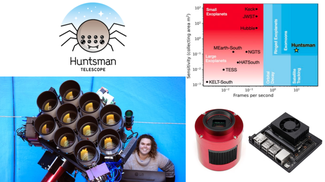
Enabling new science on the Huntsman Telescope by implementing a high frame rate "move mode" observing mode.

ADACS collaborated again with the StarFit science team. Key achievements included adopting Meson and a multi-stage build approach, and integrating ReadTheDocs documentation into the workflow.

As part of the ADACS MAP, we helped Dr Ryosuke Hirai parallelise HORMONE’s radiation solver using PETSc and MPI, enabling large-scale 3D stellar merger simulations and unlocking new science on systems like the Triple Ring Nebula of SN1987A.